Protected areas have increased to cover one fifth of Europe’s land

EEA, October 24, 2012

More than 21 % of the land has some kind of protected status in the 39 countries which work with the European Environment Agency (EEA). However, only 4 % of the sea controlled by countries of the European Union is included within the Natura 2000 network of protected areas, according to a new report from the EEA. Read more...

EU calls time on first-generation biofuels

Production of fuel-biodiesel in the EU-27 and Switzerland in 2009
EurActiv.com, October 18, 2012

The EU yesterday (17 October) launched new rules to account for indirect greenhouse gas emissions from biofuels, sending what EU Climate Commissioner Connie Hedegaard called a clear signal that first-generation biofuels were “not the future in Europe”. Read more...


Australian Carbon Trading Scheme Commences

ENN, October 16, 2012

Australian carbon trading took another step forward last month when the first carbon credits under the Carbon Pollution Reduction Scheme were issued. The national carbon trading program has been in the works for six years, politically supported by a Labor-Green coalition government; the first three to five years of the program will see a government-fixed price for carbon, to transition to a market-derived price later. Read more...

Scientists say billions required to meet conservation targets

BBC News, October 12, 2012


Reducing the risk of extinction for threatened species and establishing protected areas for nature will cost the world over $76bn dollars annually.
Researchers say it is needed to meet globally agreed conservation targets by 2020. 
The scientists say the daunting number is just a fifth of what the world spends on soft drinks annually.
And it amounts to just 1% of the value of ecosystems being lost every year, they report in the journal Science. Read more...

Nearly two thirds of the contiguous United States experiencing some level of drought

Nasa Observatory, October 03, 2012


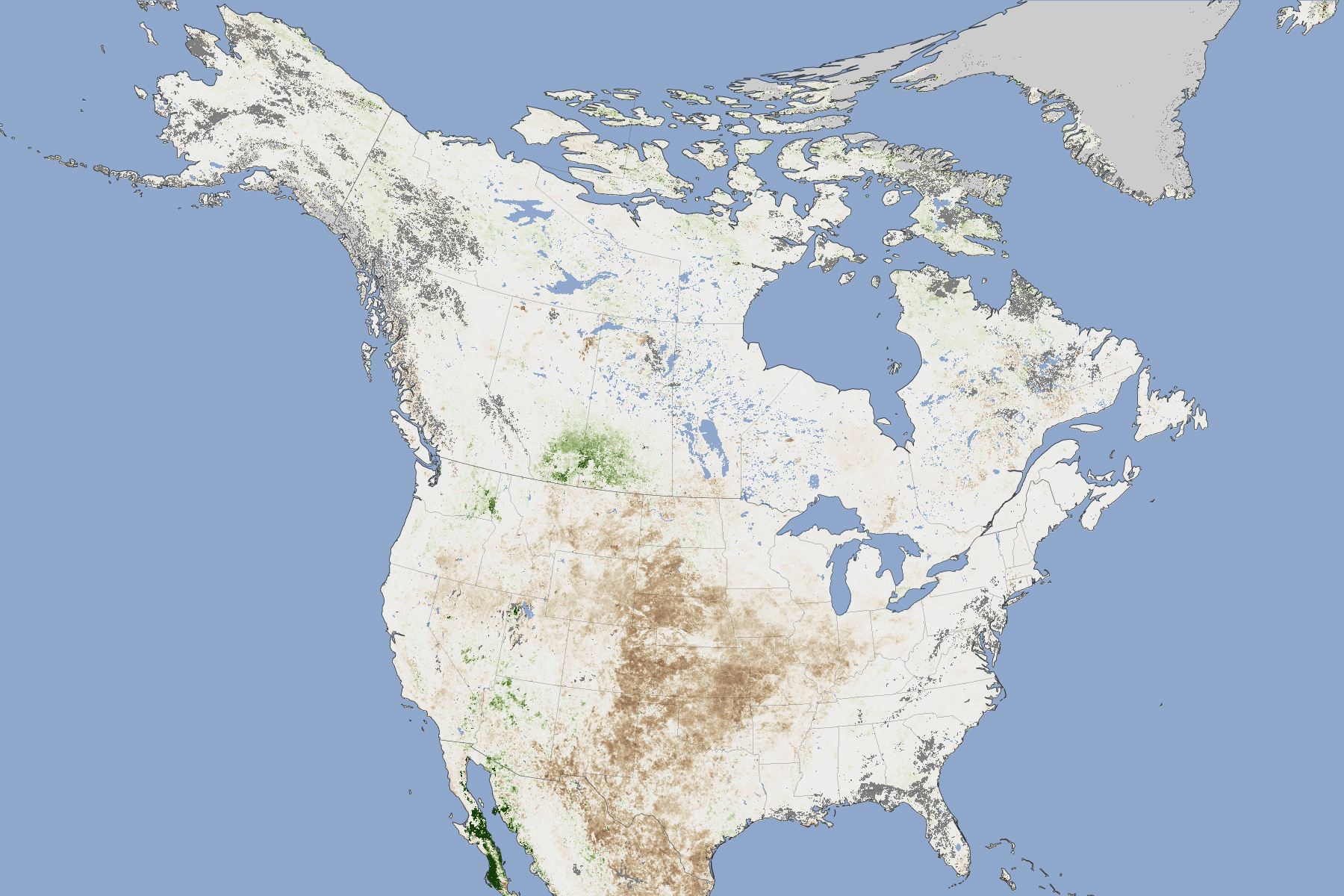
Nearly two thirds of the contiguous United States was experiencing some level of drought by the end of August 2012, according to the U.S. Drought Monitor. 39 percent of the nation suffered from severe to extreme drought. Though the numbers changed a bit in mid-September, the drought parched much of the interior United States and left both domestic and wild animals scrounging for food.
The browning and withering of vegetation in the United States and northern Mexico is clear in this vegetation anomaly map based on data from the Moderate Resolution Imaging Spectroradiometer (MODIS) on NASA’s Terra and Aqua satellites. Read more...

The "European Alien Species Information Network" is launched

The European Alien Species Information Network (EASIN) aims at increasing the access to data and information on alien species in Europe. EASIN facilitates the exploration of existing alien species information from distributed resources through a network of interoperable web services, following internationally recognized standards and protocols. Read more...

European Union's total greenhouse emissions down 2.5 % in 2011

EEA, September 13, 2012

Greenhouse gas emissions from the European Union (EU) fell by 2.5 %, despite higher coal consumption and a growing gross domestic product (GDP), according to new estimates from the European Environment Agency (EEA). Read more...


Scottish wildcat extinct within months, association says

BBC News, September 13, 2012


Scottish wildcats will be extinct in the wild within months as numbers of pure-bred cats have fallen to about 35 individuals, conservationists warn.
A team put together by the Scottish Wildcat Association (SWA) reviewed 2,000 records of camera trap sightings, eyewitness reports and also road kills. SWA said the analysis suggested there could be 35 wildcats - far fewer than previously thought.
Other research has estimated that there could be less than 400 pure-bred cats. Last month, a report on a project funded by Scottish Natural Heritage (SNH) estimated that there were 150 breeding pairs left. Read more...

Auto Production Roars to New Records

Worldwatch Institute, September 13, 2012

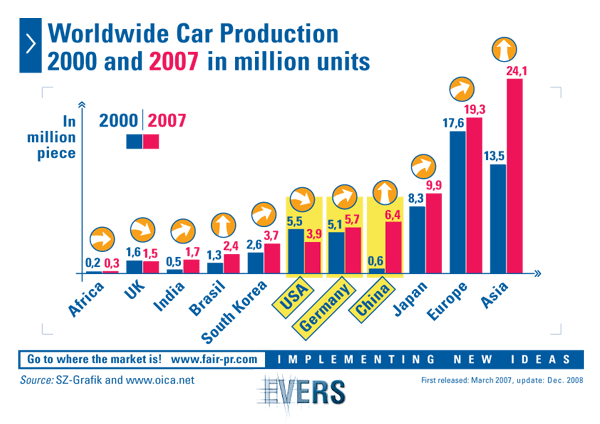
Production of passenger vehicles (cars and light trucks) rose from 74.4 million in 2010 to 76.8 million in 2011—and 2012 may bring an all-time high of 80 million or more vehicles, according to new research conducted for our Vital Signs Online service. Global sales of passenger vehicles increased from 75.4 million to 78.6 million over the same period, with a projected 81.8 million in 2012. The major driver of increased production and sales are the so-called emerging economies, especially China. Read more...

GM corn loses its edge against pests

New Scientist, September 13, 2012

You cnat keep a bad pest down. Corn rootworms in the US may have developed a resistence to a protective chemical made by a genetically modified corn. The US Environmental Protection Agency announced last week that it plans to investigate the pest resilience. Read more...

Australia to join EU's emissions trading system

EurActiv., August 29, 2012


Australia will scrap its planned floor price for carbon emissions and will link directly with the European Union's emissions trading system by 2018, Climate Change Minister Greg Combet said today (28 August).
Australia, one of the world's highest per capita emitters of pollutants blamed for causing climate change, imposed a fixed €19.08 per tonne carbon tax on around 300 of its biggest polluting companies in July, covering around 60% of emissions.
The €12.45 floor price was due to underpin the scheme when it moved to a floating emissions trading scheme in July 2015. Read more...

European Offshore Wind Energy Continues to Grow by Leaps and Bounds

ENN, July 24, 2012

The European Wind Energy Association (EWEA) assessed the offshore wind capacity in Europe over the last six months. They found that at the end of the first half of 2012, the continent's offshore wind capacity grew by at an astonishing rate from a year ago. A new report by the EWEA shows that there are 132 new offshore wind turbines, providing an additional 523 megawatts of power, and that these new turbines were fully connected to the power grid during the first half of 2012. Last year, Europe added only 348.1 megawatts from offshore wind during the same time period, making it an increase of about 50 percent. Read more...

Average Chinese person's carbon footprint now equals European's

The Guardian, July 18, 2012


The average Chinese person's carbon footprint is now almost on a par with the average European's, figures released on Wednesday reveal.
China became the largest national emitter of CO2 in 2006, though its emissions per person have always been lower than those in developed countries such as Europe.
But today's report, which only covers emissions from energy, by the PBL Netherlands Environmental Assessment Agency and the European commission's Joint Research Centre (JRC) show that per capita emissions in China increased by 9% in 2011 to reach 7.2 tonnes per person, only a fraction lower than the EU average of 7.5 tonnes. Read more...

Copenhagen wins 'European Green Capital"

ENN, 09 July 2012

The Danish city of Copenhagen has won the European Green Capital Award for 2014. Copenhagen was chosen for its achievements in "eco-innovation and sustainable mobility," for being a role model for the green economy in Europe and for engaging its citizens to feel they are part of the green solution. Read more...

Canadian Forest Industry And Environmental Groups Sign World's Largest Conservation Agreement Applying To Area Twice The Size Of Germany

ENN, July 09, 2012


The 21 member companies of the Forest Products Association of Canada (FPAC), and nine leading environmental organizations, have endorsed an unprecedented agreement — the Canadian Boreal Forest Agreement — that applies to 72 million hectares of public forests licensed to FPAC members. The Agreement, when fully implemented, will conserve significant areas of Canada's vast Boreal Forest, protect threatened woodland caribou and provide a competitive market edge for participating companies.
Under the Agreement FPAC members, who manage two-thirds of all certified forest land in Canada, commit to the highest environmental standards of forest management within an area twice the size of Germany. Read more...

Australia to create the world's largest network of marine parks

ABC News, June 14, 2012

Australia will create the world's largest network of marine parks as the world "turns a corner" on ocean protection, Environment Minister Tony Burke has announced.
The network, announced this morning, is made up of five main zones in offshore waters surrounding every state and territory.
But the Government will have to pay up to $100 million in compensation to commercial fishers who will be locked out of some of the new marine parks.
"It's time for the world to turn a corner on protection of our oceans," Mr Burke said as he announced the plans today. Read more...

Increase in cancers and fertility problems may be caused by household chemicals and pharmaceuticals

EEA, May 10, 2012


Chemicals which disrupt the hormone system – also known as 'endocrine disrupting chemicals' (EDCs) – may be a contributing factor behind the significant increases in cancers, diabetes and obesity, falling fertility, and an increased number of neurological development problems in both humans and animals, according to a review of recent scientific literature commissioned by the European Environment Agency (EEA).Read more...

Report: Global Biodiversity Down 30 Percent in 40 Years

ENN, May 15, 2012

The world's biodiversity is down 30 percent since the 1970s, according to a new report, with tropical species taking the biggest hit. And if humanity continues as it has been, the picture could get bleaker. Humanity is outstripping the Earth's resources by 50 percent — essentially using the resources of one and a half Earths every year, according to the 2012 Living Planet Report, produced by conservation agency the World Wildlife Fund (WWF). Read more...

Big rise in Pacific plastic waste

BBC News, May 09, 2012

The quantity of small plastic fragments floating in the north-east Pacific Ocean has increased a hundred fold over the past 40 years. Scientists from the Scripps Institution of Oceanography documented the big rise when they trawled the waters off California. They were able to compare their plastic "catch" with previous data for the region. The group reports its findings in the journal Biology Letters. Read more...