Showing posts with label endangered species. Show all posts

In the News: West African lions nearing extinction

ENN, Janouary 10, 2013

The report, by conservation group LionAid, says that as few as 645 lions may now remain in the wild in western and central Africa, following a worrying decline in recent years. This decline has been mirrored across Africa, with estimates suggesting that only around 15,000 wild lions remain across the whole continent, compared to about 200,000 a few decades ago. This iconic species is now extinct in 25 African countries, and virtually extinct in another 10. Read more...

Giant tortoises bounce back in the Galapagos

New Scientist, November 30, 2012


LONESOME GEORGE'S death in the Galapagos Islands may have signalled the end of the Pinta Island tortoises, but a related subspecies on a neighbouring island has been saved from extinction. The huge success of the rescue mission suggests that similarly endangered species may have a chance, too. Read more...


Borneo may lose half its orangutans to deforestation, hunting, and plantations

ENN, November 07, 2012


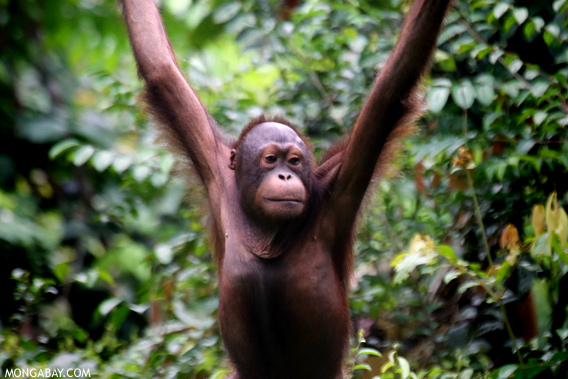
Borneo will likely lose half of its orangutans if current deforestation and forest conversion trends continue, warns a comprehensive new assessment by an international team of researchers. The study, published in the journal PLoS ONE, overlays orangutan distribution with land use regulations in Malaysian and Indonesian Borneo. Borneo has suffered high rates of deforestation, logging, and forest conversion for industrial plantations in recent decades, endangering the world's largest surviving populations of orangutans. Read more Read more... 

Scottish wildcat extinct within months, association says

BBC News, September 13, 2012


Scottish wildcats will be extinct in the wild within months as numbers of pure-bred cats have fallen to about 35 individuals, conservationists warn.
A team put together by the Scottish Wildcat Association (SWA) reviewed 2,000 records of camera trap sightings, eyewitness reports and also road kills. SWA said the analysis suggested there could be 35 wildcats - far fewer than previously thought.
Other research has estimated that there could be less than 400 pure-bred cats. Last month, a report on a project funded by Scottish Natural Heritage (SNH) estimated that there were 150 breeding pairs left. Read more...

Το «χρυσό» Τσακάλι – Ένας θησαυρός της Σάμου

Αρχιπέλαγος, 10 Απριλίου 2012

“Η Σάμος είναι το μοναδικό νησί στη Μεσόγειο όπου εντοπίζεται το πιο σπάνιο σαρκοφάγο της Ελλάδας, το ευρωπαϊκό «χρυσό» τσακάλι. Αποτελεί αναπόσπαστο μέρος της μοναδικής βιοποικιλότητας της Σάμου, καθώς κοσμεί με την παρουσία του το νησί για χιλιάδες χρόνια. Το «χρυσό» τσακάλι μαζί με την ξεχωριστή χλωρίδα και πανίδα της Σάμου προσφέρουν ένα διαφορετικό συγκριτικό πλεονέκτημα, και ενισχύουν την αειφόρο ανάπτυξη του νησιού.”

Οι μικροί και διάσπαρτοι ευρωπαϊκοί πληθυσμοί του «χρυσού» τσακαλιού συναντώνται κυρίως στις ακτές της Μεσογείου και της Μαύρης Θάλασσας, στο ύψος της Βαλκανικής Χερσονήσου. Αν και αρχικά το είδος ήταν αρκετά διαδεδομένο στην ελληνική επικράτεια, το τσακάλι σημείωσε μια κατακόρυφη πληθυσμιακή πτώση στην Ελλάδα (μέχρι και 90%) τις τελευταίες τρείς δεκαετίες. Η Σάμος είναι το μοναδικό ελληνικό νησί στο οποίο ακόμα συναντάται το τσακάλι. Διαβάστε περισσότερα...

Republic of Congo Expands National Park to Protect Great Apes

ENN, February 22, 2012

The Nouabale-Ndoki National Park is a lush rainforest park within the equatorial nation of the Republic of Congo (ROC), not to be confused with the much larger Democratic Republic of Congo to the south and east. The ROC has followed through on its commitments to expand the park by 8 percent, from about 1,500 square miles to about 1,630 square miles. The newly included area holds a unique ecosystem known as the Goualougo Triangle. The Goualougo is a very dense, swampy forest that is home to a nearly pristine and untouched great ape population that was first discovered in 1989 by Wildlife Conservation Society (WCS) scientists. Read more...

2011: A bad year for rhinos

Rhinos proaching numbers in South Africa
ENN, December 30, 2011

A record number of rhinos were poached this year in South Africa, home to the greatest number of the animals, as rising demand in Asia for their horns led to increased killings of the threatened species.At least 443 rhinos have been killed in South Africa in 2011, up from 333 last year, the national park service and conservationists said.
The street value of rhinoceros horns has soared to about $65,000 a kilogram, making it more expensive than gold, platinum and in many cases cocaine, as a belief - with no basis in science - has taken hold in recent years in parts of Asia that ingesting it can cure or prevent cancer. Read more...

Δραματική μείωση στις φώκιες λόγω της απώλειας πάγων στην Αρκτική

In.gr, 05 Ιανουαρίου 2012

Ολόκληρες γενιές της περίφημης φώκιας της Γροιλανδίας πεθαίνουν λόγω της κλιματικής αλλαγής που συρρικνώνει τους πάγους της Αρκτικής, προειδοποιούν Αμερικανοί βιολόγοι, οι οποίοι μάλιστα ανησυχούν ότι οι πληθυσμοί δεν θα μπορέσουν να ανακάμψουν. Διαβαστε περισόττερα....

Frankincense May Be Doomed

ENN, December 23, 2011

Frankincense has a long history as an ingredient in incense and perfumes, with references dating back to ancient Egypt. In the Bible, the Magi brought the fragrant resin as a gift to the baby Jesus, along with gold and myrrh -- and it remains part of the classic Christmas story. But frankincense, whose smell is sometimes described as sweet or spicy with a mix of lemon and pine, will soon become only a relic of the past if nothing is done to protect the trees that produce it, according to a new study. Read more...

Bathtub-sized marine sponge rediscovered after a century of extinction

ENN, November 23, 2011

Not found alive for over a century the evocatively named Neptune's cup sponge (Cliona patera) has been rediscovered off the shores of Singapore. Researchers with the environmental consulting DHI Group found the species during a routine dive. Although the specimen they found was small, the goblet-shaped sponge can reach nearly 5 feet (1.5 meters) high and the same in diameter. Read more...

Javan rhino driven to extinction in Vietnam


ENN, October 25, 2011

WWF and the International Rhino Foundation (IRF) have confirmed that the Javan rhinoceros has been driven to extinction in Vietnam. The last known Javan rhino was found dead in the Cat Tien National Park in April 2010. It is thought that the last Javan rhino in Vietnam was a victim of poaching, as it was found with a bullet in its leg and its horn removed. The upsetting findings are presented in a new WWF report, 'Extinction of Javan Rhino from Vietnam'. Read more...

River Otters Bounce Back in England

ΕΝΝ, August 18, 2011

The otter population in the England was dealt a serious blow in the 20th century. Around mid-century, environmentalists noticed the otter was disappearing from its natural river habitats. A study in the 1970s found that they could only be found in five percent of the sites where they once lived. The banning of certain pesticides and river cleanup programs turned around the otter's decline. A recent survey now shows the otter is back, inhabiting 60 percent of the roughly 3,000 locations they were once found. Read more...

Mekong dolphins on brink of extinction

ENN, August 18, 2011


The population of Irrawaddy dolphins in the Mekong River numbers just 85 individuals and may be on the brink of extinction, according to research by WWF. The researchers also found that calf survival was very low and that the overall population is in decline. A small population living on the border of Cambodia and Lao People's Democratic Republic may be in an even more perilous situation, with just 7 or 8 individuals. This is the only area in Lao PDR where dolphins remain. Read more...

Third of freshwater fish threatened with extinction

ENN, August 2, 2011

More than a third of freshwater fish are threatened with extinction, according to interim results from an IUCN Red List assessment. The preliminary results, revealed by scientists at the annual conference of the Fisheries Society of the British Isles at Bournemouth University, suggest that along with amphibians, freshwater fish may now be considered one of the most threatened groups of species in the world. Read more...

O όρυξ ο αραβικός επιστρέφει από το χείλος της εξαφάνισης

In.gr, 16 Ιουνίου 2011

Ο όρυξ της Αραβίας, ένα είδος αντιλόπης που πιστεύεται ότι ενέπνευσε τον μύθο του μονόκερου, έγινε ένα από τα λιγοστά ζώα που ανακάμπτουν στη φύση έπειτα από το σχεδόν ολοκληρωτικό αποδεκατισμό τους από τον άνθρωπο. Η IUCN (Διεθνής Ένωση για τη Διατήρηση της Φύσης), ο οργανισμός που εκδίδει την επίσημη Κόκκινη Λίστα των απειλούμενων ειδών, ανακοίνωσε την Πέμπτη ότι ο όρυξ μεταφέρεται από τη λίστα των «απειλούμενων» ειδών στη λίστα των «ευάλωτων». Η επιστροφή της θαυμαστής αντιλόπης στην Αραβική Χερσόνησο είναι το αποτέλεσμα ενός προγράμματος εκτροφής της σε αιχμαλωσία. Διαβάστε περισσότερα...

Rhinos in Nepal increase in number

ENN, April 27, 2011

Nepal's rhinos are on the increase, according to recently released data from a three-week National Rhino Census in Nepal by WWF. There are now 534 rhinos in Nepal, marking an increase of 99 rhinos from the 435 recorded in the last census in 2008. Read more...


Wolves Taken Off the US Endangered Species List

ENN News, April 14, 2011

For the first time ever, the US Congress has removed an animal from the Endangered Species List, a process typically done by a federal, non-political, science-based agency. The action by the US Congress sets a new precedent for altering the Endangered Species List based on political influence, enraging environmental groups. The removal would take effect in two western states that have known issues with wolves: Montana and Idaho. Wolves would now be managed by each state's wildlife agency, inevitably leading to commercial hunting. Read more...

.Σκοτώνουν τους αργυροπελεκάνους

ΤΑ ΝΕΑ, 22 Φεβρουαρίου, 2011

Δύο ισχυρά πλήγµατα δέχτηκαν µέσα σε µία εβδοµάδα οι αποικίες του αργυροπελεκάνου σε δύο από τα µεγαλύτερα εθνικά πάρκα της Ελλάδας. Στη λίµνη Βιστωνίδα βρέθηκαν 28 νεκρά πουλιά χτυπηµένα από λαθροθήρες, ενώ στον Αµβρακικό Κόλπο άγνωστοι τα έδιωξαν και στη συνέχεια κατέστρεψαν τις φωλιές και τα αυγά τους. Οιεπιστήµονες τονίζουν την ανάγκη να ενταθούν τα µέτρα προστασίας του παγκόσµια απειλούµενου είδους πουλιού, την ώρα µάλιστα που το 10% του πληθυσµού του ζει στην Ελλάδα. Διαβάστε περισσότερα...

Εξοντώνουν και τα τελευταία ελάφια

ΤΑ ΝΕΑ, 19 Ιανουαρίου 2011

Λαθροθήρες απειλούν µε αφανισµό τον τελευταίο φυσικό πληθυσµό ελαφιών στην Ελλάδα, ο οποίος βρίσκεται στη Ροδόπη και αριθµεί το πολύ 30 ζώα. Το άλλοτε διαδεδοµένοστη χώρα µας κόκκινο ελάφι βρίσκεται πλέον στη λίστα µε τα απειλούµενα είδη. Το παράνοµο κυνήγι αποτελεί τη σηµαντικότερη απειλή για την επιβίωσή του. Διαβάστε περισσότερα...

Freshwater wildlife thrives in cleanest rivers since Industrial Revolution

The Guardian, December 31, 2010

Otters, water voles and species of freshwater fish which had all but vanished from waterways have made a dramatic recovery following the healthiest decade for rivers since the industrial revolution. The toxic effects of pesticides nearly wiped out the wild otter in the 1970s, but steady improvements in water quality mean their numbers are expected to make a full recovery. Otters may already have reached their maximum capacity in parts of the south-west of England, Cumbria and Northumbria. In the past 30 years, positive sightings have risen 10-fold, says a report by the Environment Agency. Read more...