In the News: West African lions nearing extinction

ENN, Janouary 10, 2013

The report, by conservation group LionAid, says that as few as 645 lions may now remain in the wild in western and central Africa, following a worrying decline in recent years. This decline has been mirrored across Africa, with estimates suggesting that only around 15,000 wild lions remain across the whole continent, compared to about 200,000 a few decades ago. This iconic species is now extinct in 25 African countries, and virtually extinct in another 10. Read more...

Organic Farming Expands, Contributes to Sustainable Food Security

ENN, January 15, 2013

Despite a slight decline between 2009 and 2010, since 1999 the global land area farmed organically has expanded more than threefold to 37 million hectares, according to new research conducted by the Worldwatch Institute for its Vital Signs Online service. Regions with the largest certified organic agricultural land in 2010 were Oceania, including Australia, New Zealand, and Pacific Island nations (12.1 million hectares); Europe (10 million hectares); and Latin America (8.4 million hectares), write report authors Catherine Ward and Laura Reynolds. Read more... 

Report: Mercury in Seafood

Sources to Seafoodlooks at the pathways and consequences of mercury pollution across marine systems by drawing on findings from the C-MERC papers, scientific literature and data from a range of marine systems and coastal basins. The report examines mercury sources, pathways, and inputs for the Hudson River Estuary, San Francisco Bay, Gulf of Mexico, Long Island Sound, Chesapeake Bay, Gulf of Maine, Arctic Ocean, and the open ocean. Read more...

The Climate Change Performance Index 2012


GermanWatch & CAN Europe

The Climate Change Performance Index is an instrument supposed to enhance transparency in international climate politics. Its aim is to encourage political and social pressure on those countries which have, up to now, failed to take ambitious actions on climate protection as well as to highlight  countries with best-practice climate policies. On the basis of standardised criteria, the index evaluates and compares the climate protection performance of 58 countries that are, together, responsible for more than 90 percent of global energy-related CO2emissions. 80 percent of the evaluation is based on objective indicators of emissions trend and emissions level. 20 percent of the index results are built upon national and international climate policy assessments by more than 200 experts from the respective countriesRead more...

Giant tortoises bounce back in the Galapagos

New Scientist, November 30, 2012


LONESOME GEORGE'S death in the Galapagos Islands may have signalled the end of the Pinta Island tortoises, but a related subspecies on a neighbouring island has been saved from extinction. The huge success of the rescue mission suggests that similarly endangered species may have a chance, too. Read more...


Toxic Threads-The Big Fashion Stitch-Up

Greenpeace, November 20, 2012


Greenpeace International has commissioned a new investigation that delves even further into the hazardous chemicals used in the production of high street fashion.
Spurred on by the success of Greenpeace's Detox Campaign, which exposed the links between textile manufacturing facilities using toxic chemicals and water pollution, the investigation was expanded to include 20 global fashion brands – including Armani, Levi's and Zara – as well as more hazardous chemicals. Read more...


Borneo may lose half its orangutans to deforestation, hunting, and plantations

ENN, November 07, 2012


Borneo will likely lose half of its orangutans if current deforestation and forest conversion trends continue, warns a comprehensive new assessment by an international team of researchers. The study, published in the journal PLoS ONE, overlays orangutan distribution with land use regulations in Malaysian and Indonesian Borneo. Borneo has suffered high rates of deforestation, logging, and forest conversion for industrial plantations in recent decades, endangering the world's largest surviving populations of orangutans. Read more Read more... 

Climate change mitigation 'far cheaper than inaction'

SciDev.Net, October 26, 2012


Tackling the global climate crisis could reap significant economic benefits for both developed and developing countries, according to a new report.
The impacts of climate change and a carbon-intensive economy cost the world around US$1.2 trillion a year — 1.6 per cent of the total global GDP (gross domestic product), states 'Climate Vulnerability Monitor: A Guide to the Cold Calculus of A Hot Planet'. Read more... 
Read the full report...

Environment ministers pour cold water on ‘hot air’ proposal

EurActiv.com, October 29, 2012


EU environment ministers abandoned plans on Friday (26 October) to limit excess supply of Kyoto-era carbon credits on the world’s markets after seven eastern European states backed Poland’s opposition to the measure.
The Environment Council had been intended to forge a common EU position on Assigned Amount Unit carbon credits (AAUs) – disparagingly dubbed ‘hot air’ credits – before the UN climate summit in Doha next month.
But “the fact that there hasn’t been agreement within the EU block will only make expectations for the Doha conference on the carry-over of AAUs very low,” said Jeff Swartz, the policy director for the International Emissions Trading Association. Read more...

Protected areas have increased to cover one fifth of Europe’s land

EEA, October 24, 2012

More than 21 % of the land has some kind of protected status in the 39 countries which work with the European Environment Agency (EEA). However, only 4 % of the sea controlled by countries of the European Union is included within the Natura 2000 network of protected areas, according to a new report from the EEA. Read more...

EU calls time on first-generation biofuels

Production of fuel-biodiesel in the EU-27 and Switzerland in 2009
EurActiv.com, October 18, 2012

The EU yesterday (17 October) launched new rules to account for indirect greenhouse gas emissions from biofuels, sending what EU Climate Commissioner Connie Hedegaard called a clear signal that first-generation biofuels were “not the future in Europe”. Read more...


Australian Carbon Trading Scheme Commences

ENN, October 16, 2012

Australian carbon trading took another step forward last month when the first carbon credits under the Carbon Pollution Reduction Scheme were issued. The national carbon trading program has been in the works for six years, politically supported by a Labor-Green coalition government; the first three to five years of the program will see a government-fixed price for carbon, to transition to a market-derived price later. Read more...

Scientists say billions required to meet conservation targets

BBC News, October 12, 2012


Reducing the risk of extinction for threatened species and establishing protected areas for nature will cost the world over $76bn dollars annually.
Researchers say it is needed to meet globally agreed conservation targets by 2020. 
The scientists say the daunting number is just a fifth of what the world spends on soft drinks annually.
And it amounts to just 1% of the value of ecosystems being lost every year, they report in the journal Science. Read more...

Nearly two thirds of the contiguous United States experiencing some level of drought

Nasa Observatory, October 03, 2012


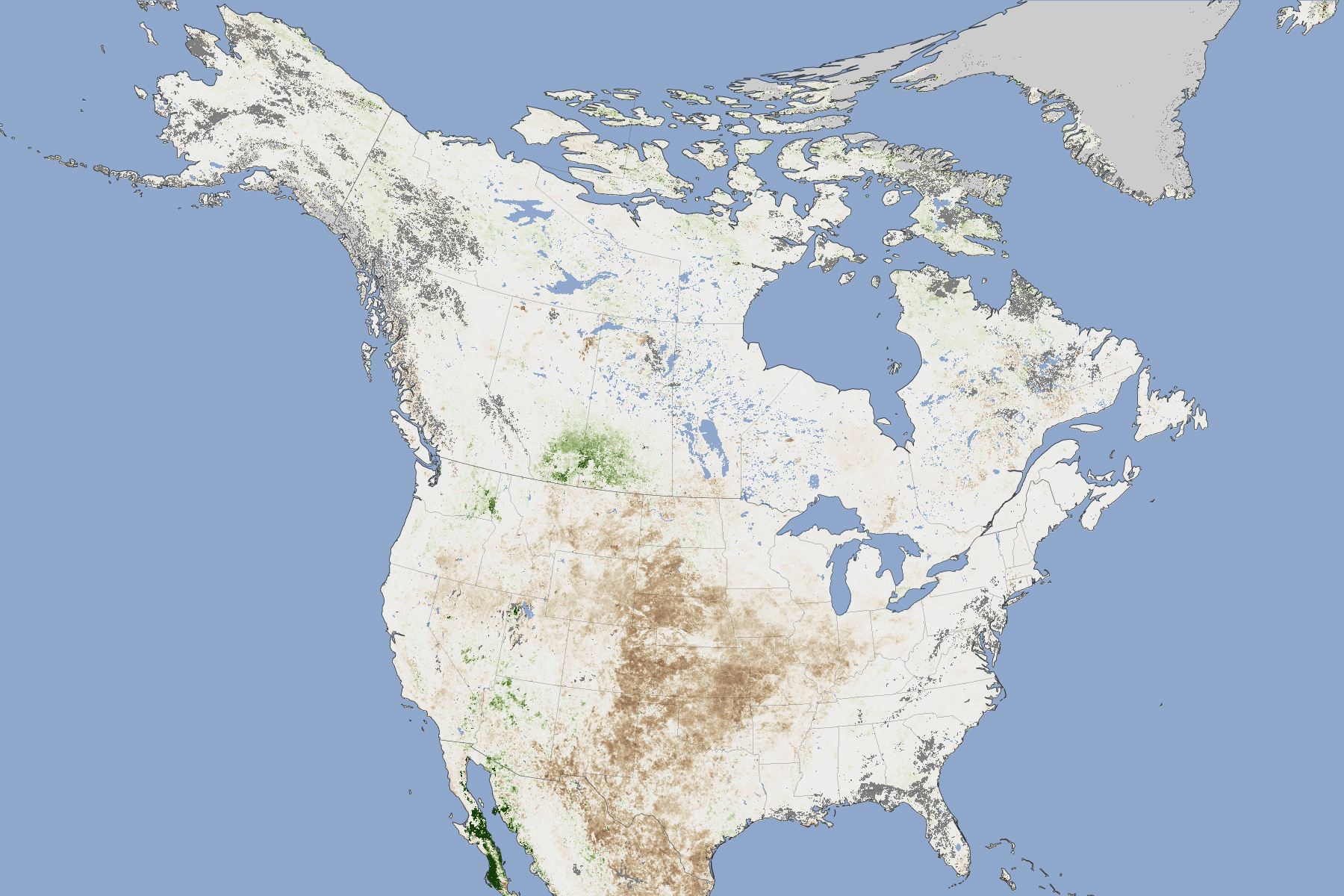
Nearly two thirds of the contiguous United States was experiencing some level of drought by the end of August 2012, according to the U.S. Drought Monitor. 39 percent of the nation suffered from severe to extreme drought. Though the numbers changed a bit in mid-September, the drought parched much of the interior United States and left both domestic and wild animals scrounging for food.
The browning and withering of vegetation in the United States and northern Mexico is clear in this vegetation anomaly map based on data from the Moderate Resolution Imaging Spectroradiometer (MODIS) on NASA’s Terra and Aqua satellites. Read more...

The "European Alien Species Information Network" is launched

The European Alien Species Information Network (EASIN) aims at increasing the access to data and information on alien species in Europe. EASIN facilitates the exploration of existing alien species information from distributed resources through a network of interoperable web services, following internationally recognized standards and protocols. Read more...

European Union's total greenhouse emissions down 2.5 % in 2011

EEA, September 13, 2012

Greenhouse gas emissions from the European Union (EU) fell by 2.5 %, despite higher coal consumption and a growing gross domestic product (GDP), according to new estimates from the European Environment Agency (EEA). Read more...


Scottish wildcat extinct within months, association says

BBC News, September 13, 2012


Scottish wildcats will be extinct in the wild within months as numbers of pure-bred cats have fallen to about 35 individuals, conservationists warn.
A team put together by the Scottish Wildcat Association (SWA) reviewed 2,000 records of camera trap sightings, eyewitness reports and also road kills. SWA said the analysis suggested there could be 35 wildcats - far fewer than previously thought.
Other research has estimated that there could be less than 400 pure-bred cats. Last month, a report on a project funded by Scottish Natural Heritage (SNH) estimated that there were 150 breeding pairs left. Read more...

Auto Production Roars to New Records

Worldwatch Institute, September 13, 2012

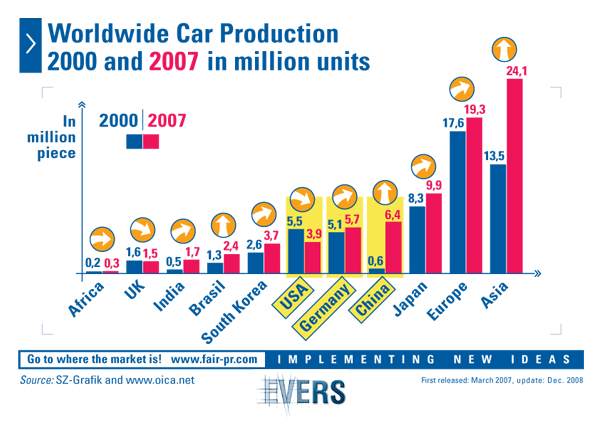
Production of passenger vehicles (cars and light trucks) rose from 74.4 million in 2010 to 76.8 million in 2011—and 2012 may bring an all-time high of 80 million or more vehicles, according to new research conducted for our Vital Signs Online service. Global sales of passenger vehicles increased from 75.4 million to 78.6 million over the same period, with a projected 81.8 million in 2012. The major driver of increased production and sales are the so-called emerging economies, especially China. Read more...

GM corn loses its edge against pests

New Scientist, September 13, 2012

You cnat keep a bad pest down. Corn rootworms in the US may have developed a resistence to a protective chemical made by a genetically modified corn. The US Environmental Protection Agency announced last week that it plans to investigate the pest resilience. Read more...

Australia to join EU's emissions trading system

EurActiv., August 29, 2012


Australia will scrap its planned floor price for carbon emissions and will link directly with the European Union's emissions trading system by 2018, Climate Change Minister Greg Combet said today (28 August).
Australia, one of the world's highest per capita emitters of pollutants blamed for causing climate change, imposed a fixed €19.08 per tonne carbon tax on around 300 of its biggest polluting companies in July, covering around 60% of emissions.
The €12.45 floor price was due to underpin the scheme when it moved to a floating emissions trading scheme in July 2015. Read more...